Ocean Management: An Introduction
The ocean is home to nearly a million different species, with some living in unknown depths and others that come up to the surface for a friendly hello. These species thrive in healthy and clean waters, needing minimal disruptions in their food chains to survive. Human intervention has long ceased flourishing ocean environments these species require to grow healthy and abundant.
We’ve all heard of pollution our entire lives, whether it be land, water, or air pollution. We’re told to pick up our trash, not leave our car on while idle, grab a ride with a friend and have even changed industries like we saw with plastic straws. Although all these efforts contribute to a greater good, these westernized concepts of environmentally conscious trends only go so far.
Ocean management is a large umbrella of smaller topics such as the fishing industry, waste pollution, water contamination and so on. This blog post will encapsulate human driven pollution that hones in on waste pollution.
Plastics
When you think of waste pollution the obvious comes to mind; plastic trash, bottles, cans, scrap clothing. However, waste pollution also includes toxins from our everyday household items that make their way into our sewer systems and out into the ocean. In my Fast Fashion blog post, I mentioned that plastic is not biodegradable, and instead breaks into smaller and smaller pieces as its life cycle continues. In Canada, only 8% of plastic thrown out gets recycled, and 4% gets burned (1). The rest is left to sit in landfills for hundreds of years to come, giving way for plastics to leach into soil matter and more importantly, water.
It is estimated that nearly 100,000 ocean mammals are killed each year due to plastic pollution, due to ingestion or entanglement (2). This can be attributed to the nearly 11 million metric tonnes of plastic that enter the ocean annually, topping us off at around 200 million metric tonnes that floats or sinks in the ocean (3). Plastic may look like foods for certain species, and even the highest functioning mammals interpret plastic for food. Plastic bags come off as squid, and can interrupt sonar echolocation and be misinterpreted for prey (2). Whales have been found washed up with over 30 kilograms of plastic in their bellies, and turtles have been found with plastic bottle holders around their shells like a noose. Nearly 60% of seabirds and 100% of turtles have been found with plastics in their bodies (3).
Toxins
Beyond micro-plastic toxins, household items such as pesticides, fertilizers, detergents and sewage create harmful impacts on our ocean environments. Human made chemicals polychlorinated biphenyls (PCB) and polybrominated diphenyls (PBDE) have been found in extremely high levels in ocean fauna of the world’s deepest ocean trenches (4). PCBs are found in electrical equipment and PBDEs in upholstery, tv’s, laptops and small appliances. This study suggests that “deep ocean trenches can become a sink for pollutants and litter that are discarded into the seas” (4). The runoff from agricultural practices also causes great harm to the oceans ecosystems. For example, when agricultural chemicals are disposed of, a large increase of phosphorus and nitrogen are accumulated – when these two react with water, it creates an alarming amount of algae and phytoplankton growth (5). This algae can go on to form red and brown tides, killing seabirds, marine life, and even harm humans (5). Any chemical dumped, whether it be household cleaning items or industrial run off, creates a chain reaction which ends up with the chemicals in the water. Whether it be through drainage, sewer systems, the rain, or just illegal dumping, marine life is facing tumultuous conditions because of human use of toxic material.
Click here to read on the detrimental effects of Fast Fashion
COVID-19
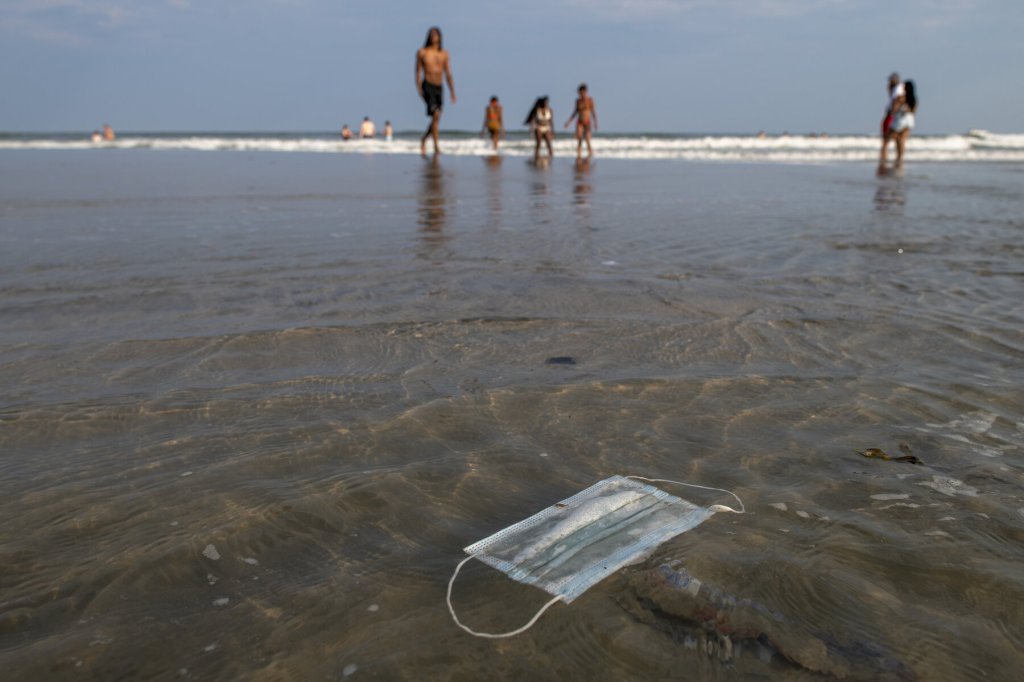
With the pandemic sweeping the globe, our focus shifted on emergency care and battling the virus. Although COVID-19 persists, 2 years later environmentalists are seeing the devastating impacts of personal protective equipment (PPE) on our oceans. Disposable masks and gloves have been found in habitats of marine animals and washed up on beaches. Over 1.56 million masks were recovered from oceans in 2020 (7). PPE is adding additional garbage to our oceans due to improper disposal. However, COVID-19 has made positive environmental impacts as well. With the pandemic, a reduction of fishing was seen due to sanitary issues, along with slower use of international shipping because of the market slowdown. With this, there was an upwards trend of repopulating species in fishing areas and lower barge pollution. Lower greenhouse gas emissions were emitted, positively affecting acidification, warming, and deoxygenation of the ocean (6). These effects were unfortunately not long lasting, as international shipping and fishing have become rampant once again.
What can we do to help?
- (This one is obvious!) Recycle your plastic
- Choose clean household cleaners
- Make your own 🙂
- Non-toxic recommendations
- https://www.hgtv.com/lifestyle/clean-and-organize/best-natural-home-cleaning-products
- Using plastic bags is okay, don’t feel bad! Reuse them!
Don’t take pressure on yourself to fix years of damage done by industries you have no control over. Do your best and advocate for change!
“Fishing nets: entangling our species to death” coming on August 27
Articles that helped me write this post!
- https://oceana.ca/en/our-campaigns/plastics/?gclid=CjwKCAjw6fyXBhBgEiwAhhiZss2V0VmEaWC90OpzlvchcavPaKVDOWTMpEM-uUjR5RDWW3UESpfP9BoChjkQAvD_BwE
- https://www.wwf.org.au/news/blogs/plastic-in-our-oceans-is-killing-marine-mammals#:~:text=While%20it’s%20difficult%20to%20know,sea%20turtle%20species%20are%20affected.
- https://oceanconservancy.org/trash-free-seas/plastics-in-the-ocean/
- https://www.unep.org/news-and-stories/story/extraordinary-levels-toxic-chemicals-deepest-ocean-fauna
- https://blog.idrenvironmental.com/chemical-waste-that-impact-on-aquatic-life-or-water-quality
- https://www.undp.org/blog/ocean-and-covid-19?utm_source=EN&utm_medium=GSR&utm_content=US_UNDP_PaidSearch_Brand_English&utm_campaign=CENTRAL&c_src=CENTRAL&c_src2=GSR&gclid=Cj0KCQjwr4eYBhDrARIsANPywChHqeXu8upRr-_lMNwfJZZ4O7h5OM1uod6sDFuVONVzG4a0FEnI2LMaAnizEALw_wcB
- https://www.pnas.org/doi/10.1073/pnas.2111530118
 One Climate Blog